Patients interested in Hybridge, please visit Hybridgeimplants.com
Patients, are you interested in Hybridge Dental Implants? Visit: Hybridgeimplants.com
A Case Report · Visual Essay for the Contemporary Clinician
Combining Intraoral Scanning, Photogrammetry, and Gen 5 Prostheses
Full-arch implant rehabilitation has evolved from analog complexity to digital precision. This case report highlights how the integration of intraoral scanning and photogrammetry enhances accuracy, efficiency, and predictability all while ensuring a passive-fitting prosthetic framework, the cornerstone of long-term success.
Restoring a fully edentulous arch presents inherent difficulties:
Achieving a “passive fit” remains critical to avoid biologic and mechanical complications.
Evaluate and modify the immediately loaded provisionals for optimized esthetics. Scan upper, lower and bite after modifications to share with laboratory.
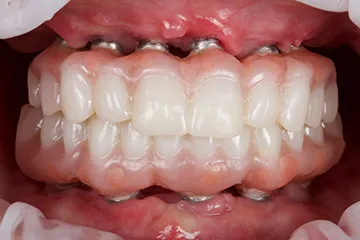
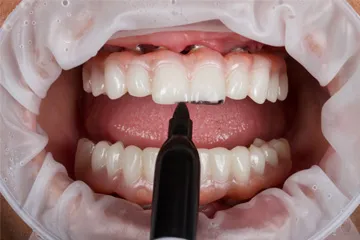
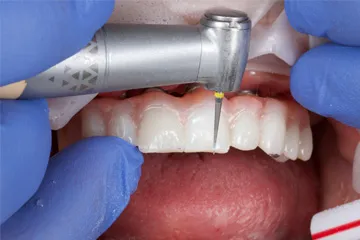
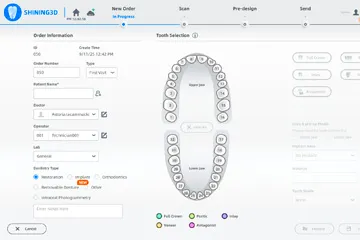
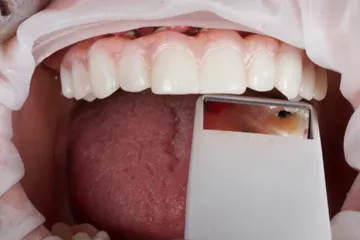
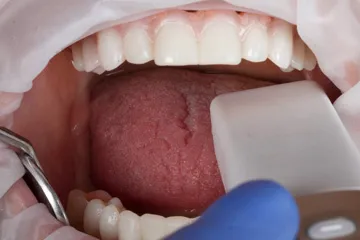
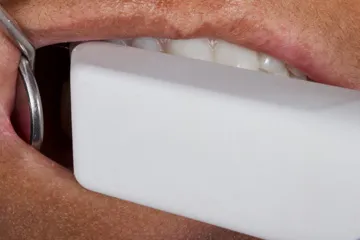
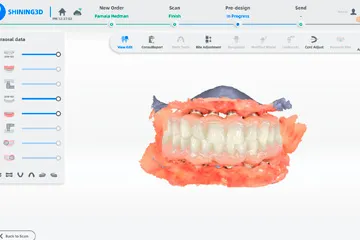
Remove the provisionals and scan the fully healed soft tissue. Place the scan flags and capture the implant positions using the photogrammetry feature. Do the same for the lower arch.
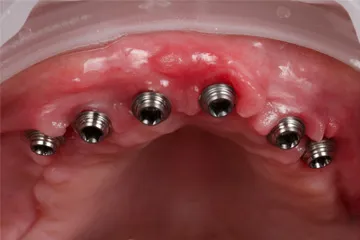
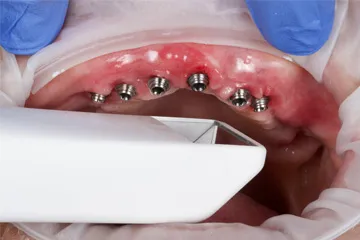

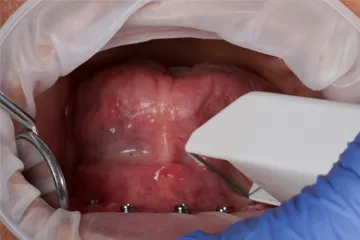
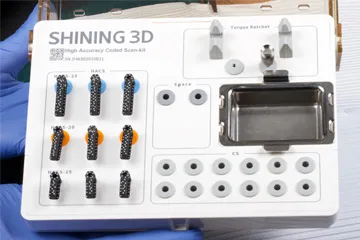
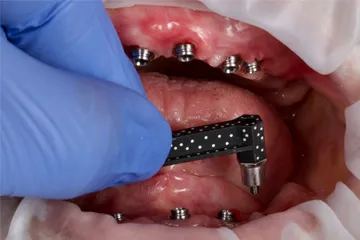
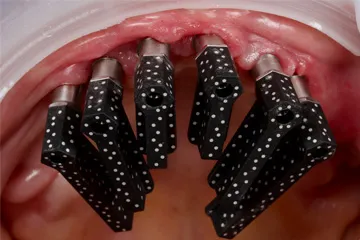
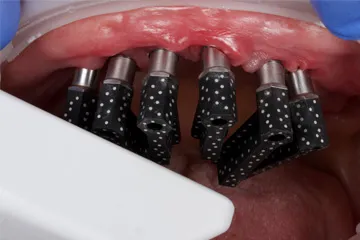
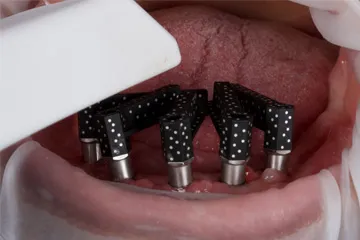
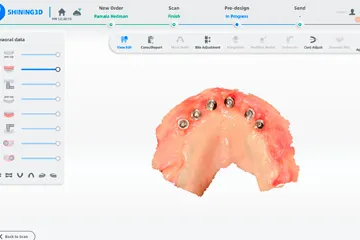
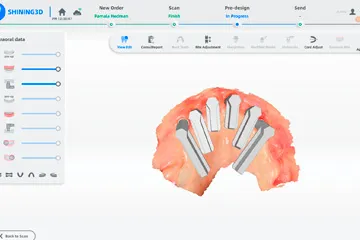


Intraoral scanners alone may accumulate errors over long spans.
Photogrammetry compensates by delivering true implant spatial relationships, ensuring restorative accuracy.
Merging intraoral scans (soft tissue and provisionals) with photogrammetry (implant positions) produces a highly accurate digital master model.
After uploading all files to the Hybridge Lab portal, review the final prostheses design and approve. After this, the team will manufacture the Hybridge Gen 5 hybrid prostheses with a CoCr framework, which is 3D laser printed followed by detailed milling of the interfaces. The teeth are 3D printed from a nanoceramic material followed by pink PMMA injection.
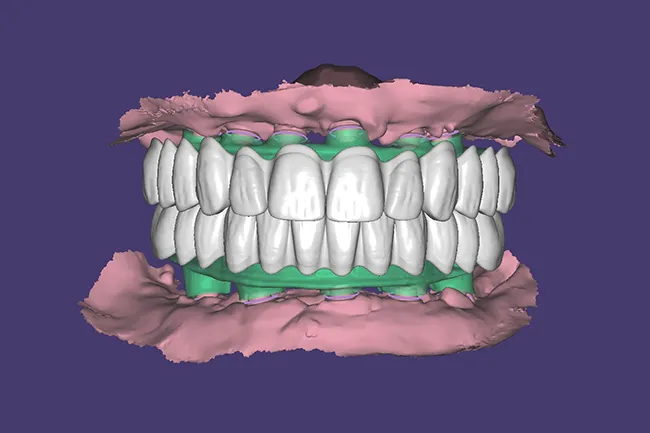
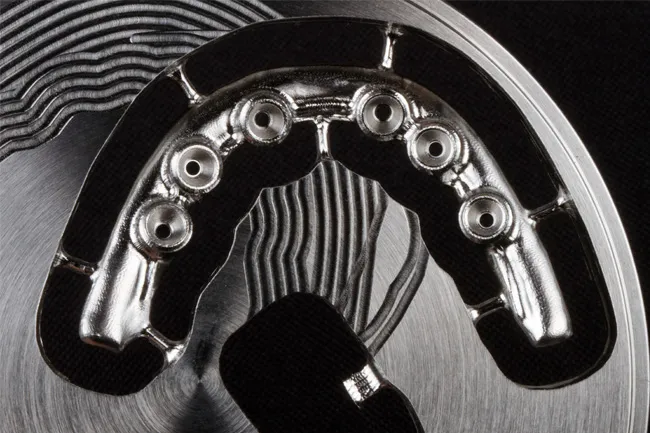
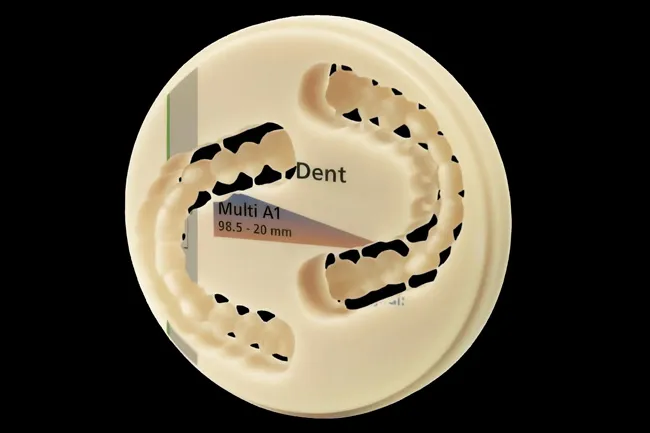
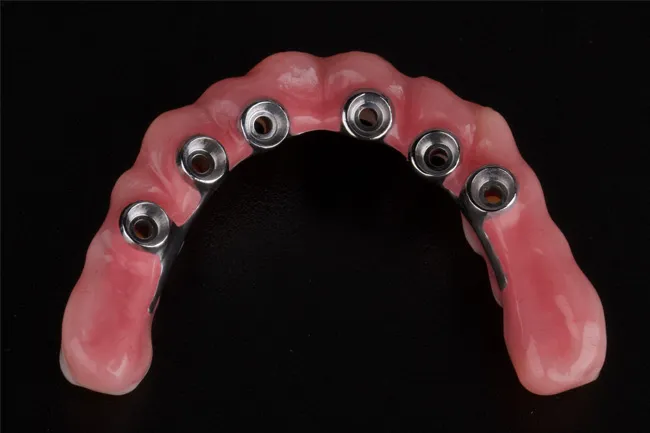
The digital workflow transforms the laboratory process:
Try-in and delivery of upper and lower Gen 5 hybrid prosthesis with a passive fitting framework and esthetically designed, functional teeth providing efficient mastication and phonetics, giving back a confident smile to the patient.
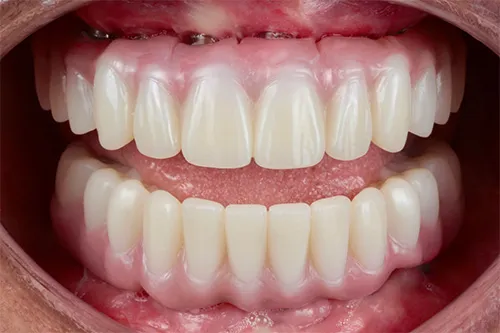
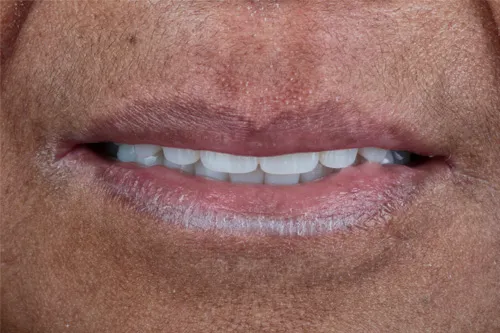
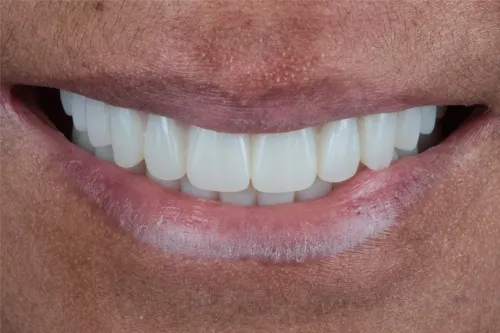
The synergy of intraoral scanning and photogrammetry represents a paradigm shift in full-arch dentistry:
Modern full-arch rehabilitation demands precision. By leveraging digital technologies, particularly the combination of intraoral scanning and photogrammetry, clinicians can deliver restorations that are not only efficient and aesthetic, but biologically and mechanically sound. Digital accuracy is not just innovation – it is responsibility.